📞  — free, 24/7
— free, 24/7 — free, 24/7| Package | Price per Dose | Price | |
|---|---|---|---|
| 4 tubes | $31.58 | $180.42 $126.29 | |
| 5 tubes | $24.71 | $176.45 $123.52 | |
| 3 tubes | $36.09 | $154.64 $108.25 | |
| 2 tubes | $38.17 | $109.04 $76.33 | |
| tube | $40.24 | $57.48 $40.24 | |
| 5 tubes | $50.80 | $362.84 $253.99 Free shipping | |
| 4 tubes | $54.13 | $309.31 $216.51 Free shipping | |
| 3 tubes | $57.37 | $245.85 $172.10 | |
| 2 tubes | $60.36 | $172.49 $120.74 | |
| tube | $63.83 | $91.19 $63.83 |
Disclaimer: This information is general education and does not replace medical advice. Speak with your clinician or pharmacist for guidance tailored to you.
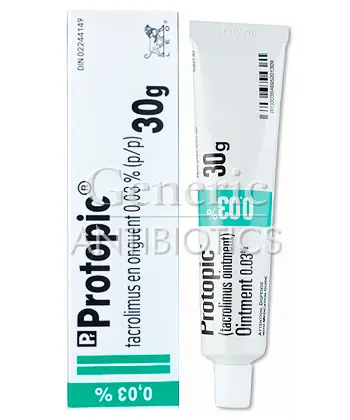
If you have eczema, you may notice itchy, red, rough patches on your skin. These flares can come and go, sometimes getting worse in dry weather or after a trigger. Protopic is a prescription cream that treats eczema by calming the skin’s immune response. It is a non-steroidal option that doctors may choose for certain areas or when steroids aren’t ideal. You may hear tacrolimus described as a calcineurin inhibitor. In plain language, it reduces inflammation without thinning the skin in many patients. Your clinician will decide if this medicine fits your situation.
Living with eczema often means dealing with persistent itching and stubborn patches. You might feel self-conscious about visible areas on your hands, face, or folds. Protopic comes in ointment form and covers only the skin you apply it to, not the whole body. It is commonly used when steroids are less appropriate or not well tolerated on sensitive areas like the face or folds of the skin. This medicine is not for use on eyes or mucous membranes unless specifically directed by your doctor.
You will use Protopic exactly as prescribed by your clinician. It’s applied to clean, dry skin in a very thin layer. Do not rub it in hard, and wash your hands after applying unless your hands are the treated area. Do not bandage or wrap treated skin unless your doctor tells you to. If you have a history of skin infections or immune-related concerns, your provider will review safety with you. If symptoms worsen or don’t improve, tell your clinician promptly.
Protopic fits into a broader eczema plan that often includes moisturizers, avoidance of irritants, and sometimes other medicines. It may be used for short periods to control flares or as a steady part of your routine under supervision. Your doctor will balance benefits with any potential risks. If you’re pregnant, breastfeeding, or have other medical questions, discuss them with your healthcare team.
In the United States, Protopic may be prescribed when a non-steroidal approach is preferred or when steroids could cause unwanted thinning of the skin. It can be a good option for people who want to spare their skin from long steroid courses or who have eczema in sensitive areas. Always follow your provider’s directions and read the patient information leaflet that comes with your medicine. If you’re unsure about how this fits with your life, ask your pharmacist to explain what to expect.
Doctors use tacrolimus to calm skin inflammation when topical steroids aren’t ideal. This helps reduce itching, redness, and swelling. It’s especially useful when eczema affects the face, eyelids, or skin folds. Your clinician may choose this option if steroids cause thinning or irritation. They may also consider it when you prefer a non-steroid treatment or have not had sufficient relief with other medicines.
Choosing between Protopic and other options depends on your skin pattern and age. For mild flare-ups on non-sensitive skin, a milder steroid might be tried first. In sensitive areas, a non-steroidal product or a different non-steroidal option may be preferable. Your doctor also looks at how quickly you need relief and whether you have any infections or other conditions that might affect treatment. They may plan a stepwise approach with moisturizers and irritant avoidance alongside medications.
Doctors weigh the risks and benefits of each approach. They consider how your skin responds to a given medicine, your history of infections, and any immune system concerns. If one option isn’t helping or causes unwanted effects, they may switch to another medicine or adjust your overall plan. You should feel comfortable asking why a particular choice is recommended for you. Always share full details about other skin products you use.
In practice, tacrolimus is one part of a broader strategy. It can be used as a long-term tool in coordination with daily moisturizers and triggers control. Your clinician may adjust how often you apply it based on how your skin responds. They may also coordinate timing with other therapies, especially when managing a flare. Have an open conversation about what you expect from treatment and how to manage side effects.
Tacrolimus blocks a specific part of the skin’s immune pathway, which lowers inflammation. This helps reduce the itching and redness that come with eczema. It acts on the immune signals in the skin rather than broad suppression of inflammation. In plain terms, it helps calm the skin without thinning it as some strong steroids can.
Pimecrolimus is a close relative that works in a similar way. Both are calcineurin inhibitors, but some patients notice a difference in tolerability or onset between them. Tacrolimus may act a bit more firmly in some people, while pimecrolimus is often described as gentle. Your clinician may choose one based on how your skin responds and where the disease is located.
Unlike steroids, tacrolimus and pimecrolimus don’t come with the same risk of thinning the skin with long-term use. They can be helpful for delicate areas. Some people experience a brief burning or warmth at the application site when starting treatment. This usually improves with time as the skin adjusts. For another non-steroidal option, crisaborole uses a different mechanism with its own timing of effect.
Crisaborole, a PDE-4 inhibitor, is another non-steroidal choice. It targets a different inflammatory pathway than calcineurin inhibitors. The choice between tacrolimus, pimecrolimus, and crisaborole depends on your location, age, disease pattern, and doctor’s experience. Your clinician will help decide what fits best for you.
| Name | Primary use | Typical onset | Key advantage |
|---|---|---|---|
| Protopic (tacrolimus) | Non-steroidal option for atopic dermatitis; sensitive areas | Often days to weeks; some improvement may be seen early | Non-steroidal; useful on face and folds; steroid-sparing |
| Hydrocortisone cream (low-potency steroid) | Mild eczema and everyday relief | Usually within a few days | Widely available, inexpensive, fast relief for mild flares |
| Pimecrolimus (Elidel) | Mild-to-moderate atopic dermatitis | Several days to about a week | Similar non-steroidal option with tolerability for some users |
| Crisaborole (Eucrisa) | Mild-to-moderate eczema; steroid-sparing option | Often weeks for clear change | Non-steroidal with a distinct mechanism and profile |
Wash and dry the treated area before applying the medicine. Use only a thin layer on the affected skin. Cover the skin lightly as directed by your clinician or the patient leaflet.
Apply to clean skin and avoid eyes, nose, and mouth. If the product touches these areas, rinse with water right away. Do not use near mucous membranes unless your doctor says it is safe.
Do not wrap, bandage, or occlude treated skin unless your doctor instructs you to do so. Check with your clinician before applying other creams or ointments on the same area. If you miss a dose, resume as directed without doubling up.
Avoid frequent sun exposure on treated areas unless advised. If you have a skin infection, your provider may treat it first before continuing tacrolimus. Use as part of a broader skincare plan that includes moisturizers and trigger avoidance.
Store the medicine as advised on the package or by your pharmacist. Keep it out of reach of children. If you notice a concerning reaction or signs of an infection, contact a healthcare professional promptly. Do not use beyond the timeframe prescribed unless told to do so.
Common side effects include a stinging, burning, or warmth where the medicine is applied. These sensations often fade after a few days of use. If they persist or worsen, tell your clinician so they can adjust the plan.
Less commonly, people notice redness, itching, or a mild irritation at the treated site. Severe allergic reactions are rare but possible; seek urgent medical help if you develop difficulty breathing, swelling, or widespread hives.
Contraindications include active skin infections in the treated area, known allergy to tacrolimus or other components, or a history of certain immune conditions. Tell your doctor about any immune-suppressing medicines you take. Discuss potential risks with pregnancy or breastfeeding if applicable.
Long-term safety data for topical tacrolimus emphasize regular review with your healthcare professional. There is ongoing discussion about cancer risk headlines in past labeling; check the official patient information and talk with your pharmacist or doctor if you have concerns. Always report unusual changes in your skin or new symptoms promptly.
People using this medicine should monitor their skin for signs of infection or irritation. If new or worsening symptoms occur, inform your clinician. Your plan may include pauses, dose adjustments, or switching to a different therapy based on response and safety considerations.
Topical tacrolimus is less likely to interact with other medicines when applied to the skin, but it is not completely free of interactions. Always tell your pharmacist about all medicines, vitamins, and topical products you use on or near your eczema.
Avoid applying other topical immunosuppressants on the same treated area unless your doctor directs you to do so. The combination could raise the risk of side effects. If you take oral or systemic immune medicines, your doctor will weigh potential interactions and monitor you closely.
Oral medications that suppress the immune system can interact with tacrolimus use, so your healthcare team will review your full medication list. If you notice signs of infection, unusual fatigue, or fever, seek medical advice promptly. Do not start new medications without consulting your clinician first.
People who want to reduce steroid exposure may benefit from tacrolimus, especially in the face and folds. For some, it offers reliable control without thinning the skin that steroids can cause over time. Your dermatologist can help decide whether tacrolimus is your best option versus other nonsteroidal choices.
Children and adults may respond differently to these medicines. In some cases, tacrolimus requires careful monitoring in younger patients. Your clinician will consider age, skin type, and how the disease behaves in daily life when making a recommendation. Always use the option that aligns with safety and comfort for you or your child.
In practice, the choice among Protopic, pimecrolimus, crisaborole, or a steroid depends on location of eczema, disease severity, and prior response. A stepwise approach may be used, starting with one option and adjusting as symptoms change. Your healthcare team will help you weigh risks, benefits, and personal preferences.
Remember that a good moisturizer and an eczema-friendly routine support any medicine you use. If you ever consider stopping a treatment or switching to another product, discuss it with your clinician first. The aim is steady improvement with the least disruption to your daily life.
Yes, tacrolimus is commonly used on the face when directed by your doctor. Use a thin layer and avoid the eyes, eyelids, and mouth unless advised otherwise. If irritation occurs, tell your clinician so they can adjust the plan.
Protopic offers a non-steroidal option that may be preferred for sensitive areas or long-term use. Hydrocortisone is often effective for mild flares but can thin the skin with extended use. Your clinician can compare benefits for your specific pattern.
Some people notice improvement within days, while others may take a couple of weeks. The timeline depends on the area treated and the severity of the flare. If there is no improvement after a reasonable period, consult your clinician.
A generic tacrolimus ointment may be available depending on local rules. Check with your pharmacist or clinician about current options and coverage. Availability can vary by region and over time.
Tacrolimus is used in children under supervision when clinically appropriate. The safety profile is considered different by age and body area. Your pediatrician will tailor the plan and monitor reactions or irritation.
Switching is a common approach when steroids are not ideal for you. Your doctor will guide the transition to minimize irritation and ensure continued control of symptoms. Do not change therapy without professional guidance.
Most interactions involve systemic medicines rather than topical products. Tell your clinician about all medicines you take, including OTC products and supplements. Your pharmacist can review potential risks with you.
Protopic is a calcineurin inhibitor; crisaborole inhibits a different inflammatory pathway. Both are non-steroidal options, but people may respond differently to each. Your clinician will help choose based on your disease pattern and tolerance.
Your healthcare professional is the primary source for advice tailored to you. They can explain how Protopic fits with your eczema history and overall health. The patient information leaflet provided with the medicine also covers common questions.
Ask your pharmacist to walk you through how to use the medicine correctly and what signs to watch for. It’s helpful to keep a brief diary of flare timing, skin changes, and any side effects you notice. The more detail you share, the better your plan can be adjusted.
If you need additional reassurance, schedule a follow-up with your clinician. Seek urgent medical help if you develop trouble breathing, swelling, or a severe reaction after using the medicine. Remember to keep all healthcare providers informed about every medicine you are using.
14–21 days. Free from $200.00 .
5–9 days. $30.00
−10% when paying with cryptocurrency.
−10% on all repeat orders.
All orders are packed in neutral, unbranded boxes with no product name on the outside.