📞  — free, 24/7
— free, 24/7 — free, 24/7| Package | Price per Dose | Price | |
|---|---|---|---|
| 180 pills | $0.81 | $208.18 $145.73 | |
| 120 pills | $0.90 | $154.64 $108.25 | |
| 90 pills | $1.05 | $134.81 $94.37 | |
| 60 pills | $1.18 | $101.11 $70.77 | |
| 30 pills | $1.39 | $59.47 $41.63 | |
| 180 pills | $1.62 | $418.36 $292.85 Free shipping | |
| 120 pills | $1.74 | $297.41 $208.19 Free shipping | |
| 90 pills | $1.89 | $241.89 $169.32 | |
| 60 pills | $2.01 | $172.49 $120.74 | |
| 30 pills | $2.22 | $95.16 $66.61 |
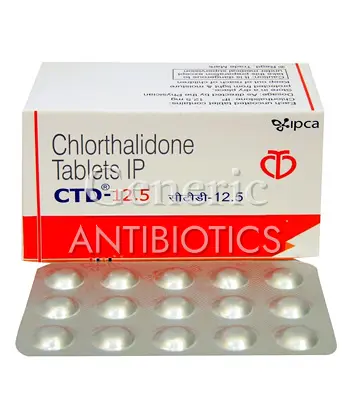
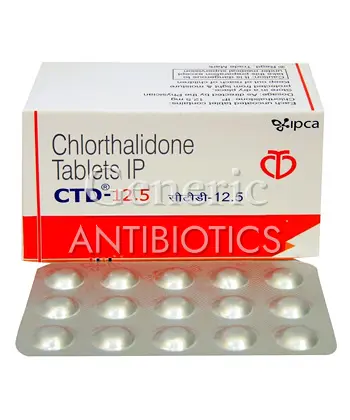
Chlorthalidone, introduced in the 1960s, is distinguished by an unusually long half-life of about 40–60 hours, which supports once-daily dosing and sustained blood pressure control. It is one of the most widely used thiazide-like diuretics worldwide, with a robust evidence base from large cardiovascular outcome trials. The agent combines diuretic and antihypertensive actions through distal nephron effects that promote natriuresis and influence calcium handling.
Chlorthalidone is a thiazide-like diuretic. It inhibits the Na+/Cl- cotransporter in the distal convoluted tubule, increasing excretion of sodium and chloride with secondary water loss.
Pharmacodynamics and pharmacokinetics: The long half-life yields sustained natriuresis and antihypertensive action beyond 24 hours. It is predominantly eliminated by the kidney, and renal impairment may necessitate dose adjustments; ongoing monitoring of electrolytes and kidney function is advised.
The primary indication is management of essential hypertension. It is also used to treat mild to moderate edema from heart failure, nephrotic syndrome, or cirrhosis when fluid retention is present.
Chlorthalidone reduces urinary calcium excretion, which can offer additional benefits for patients at risk of osteoporosis or calcium-containing kidney stones. In some cases it serves as part of combination therapy for resistant hypertension, often with other antihypertensives.
Chlorthalidone is usually prescribed as a once-daily oral tablet, commonly in 12.5 mg to 25 mg doses. Dosing may be adjusted based on response and electrolyte status.
Patients should take it in the morning to minimize nocturia. It can be taken with or without food, but consistent timing aids tolerability. If a dose is missed, take it as soon as remembered unless the next dose is soon; never double dose.
Baseline laboratory assessment is recommended before initiation, including serum electrolytes, uric acid, and renal function. Monitor periodically after starting or changing therapy.
Use with caution in renal impairment, diabetes, gout, or a history of electrolyte disturbances. Potential drug interactions include NSAIDs, other antihypertensives, and agents affecting potassium. Advise patients to avoid dehydration and report symptoms such as severe dizziness, confusion, or muscle weakness.
Electrolyte changes are the most common adverse effects. Hyponatremia and hypokalemia can occur, with dehydration and orthostatic symptoms possible.
Other reported effects include elevated uric acid with gout risk, phototoxic reactions, fatigue, and headaches. Side effects are often dose-related and may improve with adjustment or gradual titration.
14–21 days. Free from $200.00 .
5–9 days. $30.00
−10% when paying with cryptocurrency.
−10% on all repeat orders.
All orders are packed in neutral, unbranded boxes with no product name on the outside.